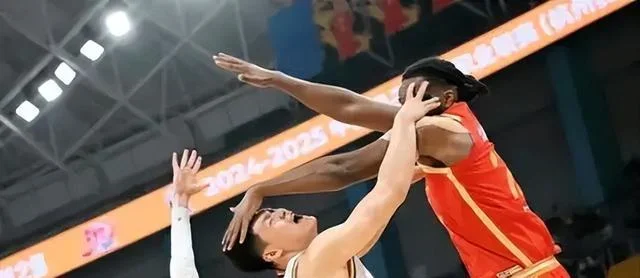

CBA playoff quarterfinals Game 1 has just concluded, and the four matches completely overturned all predictions. The intensity of the upsets was even more surprising than watching Yi Jianlian play in the NBA Summer League for the first time.
Shanxi’s away victory over Guangsha was a shocker: many thought Shanxi would be lucky to hold on for a half, but they dominated Guangsha, the third seed in the regular season, securing the match point in the series. Guangsha’s key player, Sun Minghui, was absent due to injury. He averaged 15.2 points and 8.7 assists this season, ranking fourth in the league in assists and serving as the team’s offensive initiator. Without him on the court, Guangsha’s offense looked directionless, with passes relying on luck and no one to organize the interior attack.

In contrast, Shanxi averaged 21.3 assists per game this season, ranking third in the league, with all players capable of passing and finding open teammates on the court. Additionally, Shanxi, ranked 10th in the regular season, carried little psychological burden and played freely, while Guangsha’s players, due to their higher regular season ranking, were somewhat tense and lost their mental balance, eventually collapsing. This game wasn’t about Shanxi being exceptionally strong; it was more about Guangsha’s mistakes.
Meanwhile, the matchup between Shenzhen and Zhejiang played out like a script repeating last year’s playoff scenario. Shenzhen’s head coach, Zheng Yonggang, was a starting guard for the national team and has spent years honing his coaching skills. He has built a solid defensive system for Shenzhen in recent years. In this game, they neutralized Zhejiang’s key foreign player, Johnson, who averaged 21.8 points and 10.5 rebounds as Zhejiang’s interior pillar, but scored only single digits. Shenzhen’s interior defense, anchored by Shen Zijie and Gu Quan, ranked second in the league in blocks and completely limited Johnson’s offense. They also anticipated Zhejiang’s tactical patterns based on last year’s encounter, knowing Zhejiang likes to attack the paint. Shenzhen shut out Zhejiang, becoming the first team to lock in the match point.
Playoff experience matters a lot: Shenzhen played in the playoffs last year, so they had targeted preparations. Zheng Yonggang, as a typical player-turned-coach, uses his own playing experience to fine-tune the team’s defense, which is an advantage of coaches with professional playing backgrounds.
The Beijing-Guangdong rivalry was intense, with Beijing taking the first win at home. However, their interior combination of Zhou Qi and Spellman didn’t mesh well. Both are power-oriented interior players, leading to uneven ball distribution and overlapping defensive positions. Sometimes both were unsure whether to rebound or defend. Beijing’s head coach, Xu Limin, is already considering using McGee, whose athleticism could better fill the interior gaps. This game also saw on-court altercations, like a rebounding scramble that almost led to pushing. This reflects the issue of sportsmanship; according to CBA standards, players should not make overly aggressive moves due to emotions, such as flagrant fouls or yelling at referees, which could result in ejection and league suspension.
Guangdong’s situation is also problematic. Du Feng faces a critical point in his coaching career, as the team’s performance fluctuated significantly this season. If the series ends in a sweep, their reconstruction period will be prolonged. Du Feng was expected to adjust tactics, but Zhou Qi and Spellman’s chemistry issues are long-standing and hard to solve quickly.
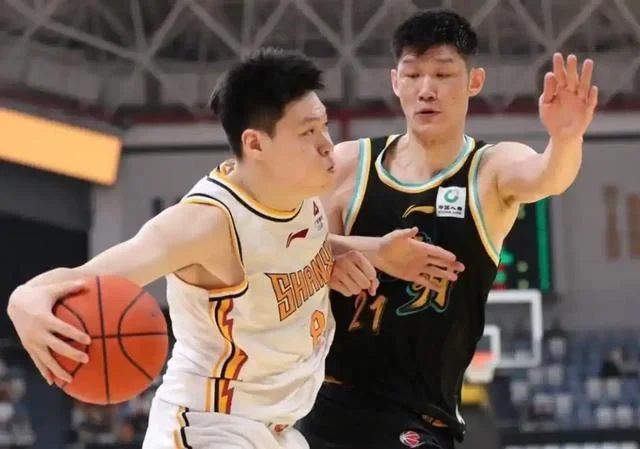
The Shanghai-Shandong game saw Shanghai win by 5 points, but it revealed problems from a long break. Shanghai finished the regular season 9 days early and rested for nearly a week, causing a noticeable decline in players’ competitive state. Both offense and defense seemed “rusty,” with slow movement and frequent passing errors. Shandong, a playoff newcomer with many young players, lacked experience in handling key moments and lost the game due to a few mistakes. Many expected Shanghai to easily beat Shandong, but Shanghai’s players moved a step slower, which was thought to be a fitness issue but turned out to be rustiness from the long break.
Regular season rankings and rest time don’t tell the whole story. Although Shandong had a lower regular season ranking than Shanghai, they had stable form but lacked experience. This CBA playoff season has seen many upsets, with three series in the 12-to-8 stage and two more in the quarterfinal Game 1s. This shows that weaker teams are increasingly resilient, and the roster weaknesses of stronger teams are easier to exploit.
The quarterfinals use a best-of-three format, where a single loss puts a team in a desperate situation with a 50% margin of error. One game can determine the match point, which is why Game 1 was so competitive. Many fans and coaches are discussing whether to change the format to best-of-five, as the best-of-three format allows too much randomness, but the decision rests with the league.
The conclusion of CBA quarterfinal Game 1 did not lock in the final four; instead, it revealed the brutal nature of playoffs. Upsets are not accidental but result from team tactics, roster health, and mental adjustments. The match point teams still have hidden risks, and do-or-die Game 3 reversals are always possible. From Shanxi’s team basketball to Shenzhen’s targeted defense, from Beijing-Guangdong’s lineup concerns to Shanghai’s form issues, every matchup highlights the unpredictability of competitive sports. In the following series, whether Sun Minghui returns to save Guangsha, if Du Feng can adjust tactics, and whether Shanghai can hold their match point will be key focuses for fans.