

Chinese companies have emerged as a major financial force behind the 2026 FIFA World Cup, with total sponsorship contributions exceeding $500 million (approximately 36 billion yuan) for the tournament in the United States, Canada, and Mexico. However, a growing dispute over broadcast rights has left many Chinese fans anxious: Will they actually be able to watch the games?

With less than a month before the tournament kicks off, a heated debate is unfolding across Chinese football communities regarding the TV rights negotiations. Despite China not qualifying for the World Cup, FIFA has demanded a significant increase in broadcast fees from the Chinese market. China Central Television (CCTV), the traditional rights holder, has balked at the new pricing, and negotiations have stalled.
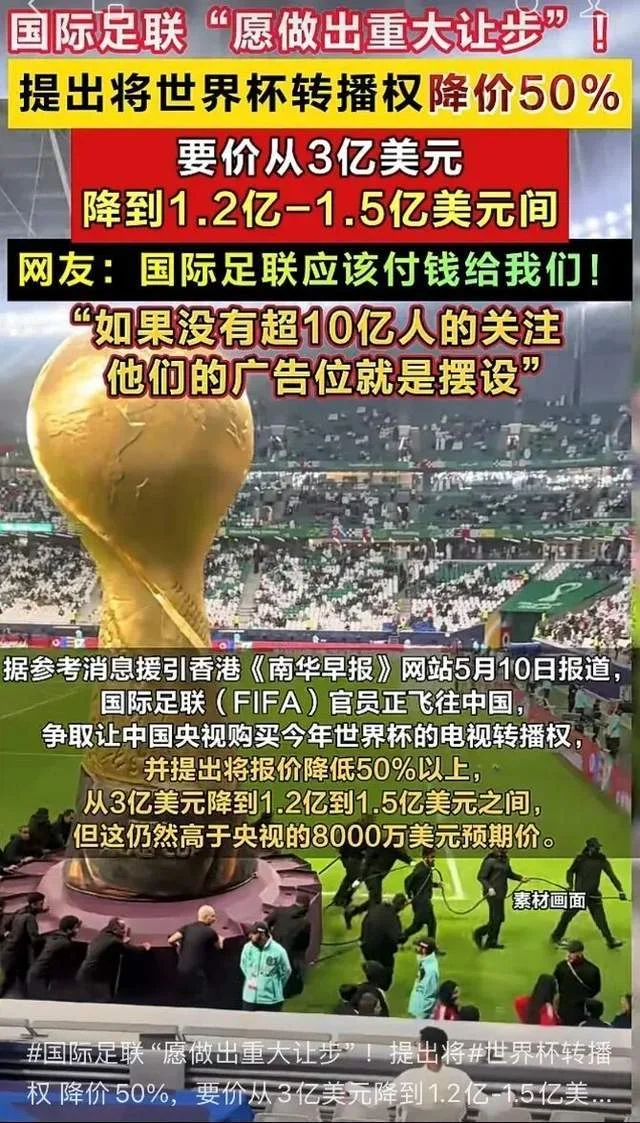
FIFA initially sought between $250 million and $300 million (with some sources suggesting up to $400 million) for the Chinese mainland broadcast rights. CCTV, however, has a target budget of only $60 million to $80 million. Even after FIFA lowered its offer to between $120 million and $150 million, the two sides remain far apart.
FIFA argues that China, due to its massive fan base, is classified as a top-tier high-price market alongside the United States and Europe. For context, the U.S. and U.K. also pay in the range of $300 million. Additionally, the 2026 tournament has expanded from 32 to 48 teams, increasing the number of matches from 64 to 104—justifying higher fees in FIFA’s view.
But critics point out that the previous two World Cups (2018 and 2022) were sold to China as a package for approximately $300 million, meaning the new price for a single tournament would be double the per-event cost. The quality of expanded teams like Cape Verde, Curacao, Haiti, and the Democratic Republic of Congo is also questioned, with many Chinese fans unfamiliar with those squads.
Furthermore, match kick-off times are unfavorable for Chinese audiences, with most games scheduled after 2 a.m. local time, reducing viewership and advertising revenue potential. Many fans have expressed anger online, stating they would rather skip the broadcast altogether than accept such steep pricing.
According to the latest reports, FIFA has offered a significant concession, proposing a 50% reduction in the rights fee. However, this still exceeds CCTV’s offer, and the final price is expected to be announced in mid-May.
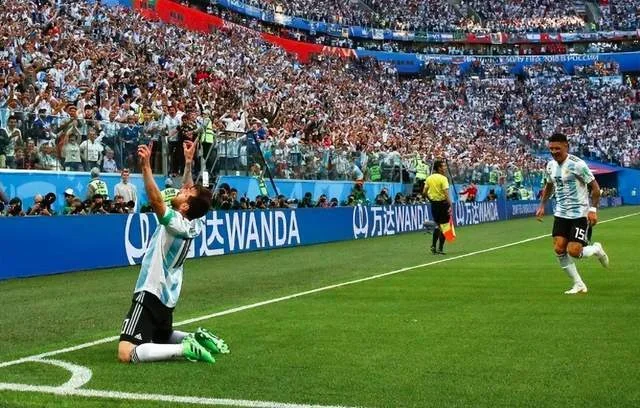
Chinese companies have already invested heavily in sponsorship. The 2026 World Cup sponsorship roster includes Lenovo, Hisense, and Mengniu, with total Chinese contributions surpassing $500 million. In the previous 2022 Qatar World Cup, at least eight Chinese companies (including Hisense, Mengniu, Wanda, vivo, OPPO, Alipay, and BYD) collectively spent over $500 million.
Why do Chinese firms invest so heavily in a tournament their national team hasn’t qualified for? The answer lies in global exposure. The 2022 World Cup reached a global audience of 5 billion, with 6 billion social media interactions. For companies like Hisense, sponsorship has directly boosted overseas brand recognition by 30% and contributed to a 70% revenue growth since 2018.
Importantly, insiders reveal that Chinese sponsors have contractually required FIFA to guarantee Chinese fans can watch the games. Failure to secure a domestic broadcast deal could breach those agreements. Therefore, it is widely expected that a solution will be reached before the tournament begins. Fans are advised to stay patient and prepare for an exciting month of football.
